19.1K
Downloads
378
Episodes
Weekly topics covering life‘s challenges with a positive spin and a new perspective. It‘s time to connect, learn, and grow!
Episodes
Tuesday Dec 08, 2020
Tuesday Dec 08, 2020
SHOW NOTES:
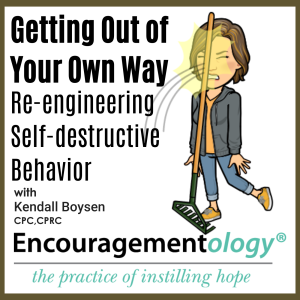
On this show...we are taking it down, ourselves that is. Just like a tackle in the game-winning play, we are taking ourselves down and getting out of our own way. Isn’t it just like us to sabotage a good thing, choose self-destructive behaviors over constructive ones, and be willing to justify it to the end. Today we are getting real. Honestly, who loses here? Or better yet, who isn’t winning? What if we negotiated a new deal. Instead of letting go and doing an about-face, we re-engineering our self-destructive behaviors into new self-serving behaviors.
What is the first thing that needs demolishing? Step back to see the bigger picture. You know how it goes when you are in the ditch digging away with no direction, plan, or insight - you can get nowhere fast! It’s also hard to see a new perspective from the bottom of a ditch. Step out, and look at the horizon. Where are you trying to go and how are you going to get there? You could take the long way hitting wall after wall, taking extended breaks to lick your wounds, picking up what pieces are left to make another go of it only to find yourself detoured at the first patch of rough road.
Or you could take some time to chart out your course. Understand your strengths, weaknesses, address your limitations, search your soul for purpose and passion, enlist help from trusted friends and advisors, great a reliable support system, and make a vow to yourself that you WILL NOT take a step back. Only forward momentum allowed.
You even have another option, do nothing. Stay where you are and find a way to be happy and if not, a way to get by another day. Remember, life is full of choices.
Matt Duczeminski shines a light on 12 Self-Destructive Habits to Eliminate for a Positive Life in an article he wrote for lifehack.com. On the show, we dig into each one with a “fix”.
- A Self-Defeating Mindset
- Laziness
- Forced Incompetence
- Self-Pity
- Taking It out on Others
- Abuse of Drugs or Alcohol
- Running From Emotions
- Social Isolation
- Refusing Help
- Neglecting Personal Needs
- Unnecessary Self-Sacrifice
- Self-Harm
It took me a long time to come around full circle and face my demons - destructive behaviors. I had denial down, I tell you. When I finally hit a wall and was face to face with a choice, I chose me. I started putting myself first. That meant shining a light on everything weighing me down, the destructive behaviors that I had fiercely protected and denied. Seeing them for what they truly were, provided me another choice. Stay the course or make some changes. I chose to remove the obstacles in front of me and to get serious about behaviors that never served me in a positive way.
I removed crutches like alcohol and cigarettes and took an honest look at my need to control and fix. What would happen if I let others live their lives the way they wanted to….would mine still exist? The answer is, yes, and thrive! Ooooh when you channel all your positive energy in your own direction, the current is strong and will propel you faster than you might be prepared for. Clear-headed and unencumbered I can be strategic about what I want and how I plan to get there.
I didn’t totally let go of my desire to “fix” I just re-engineered it in a positive way. Now I help people who actually want help and I do so in a loving, no strings or expectations attached kind of way.
Steven Handel explains How to Be 100% Honest With Yourself: A Prerequisite to Self-Improvement in an article he wrote for theemotionmachine.com
Acknowledge both the good and bad in your life
Take time to reflect
Admit it when you make mistakes
Pay attention to your feelings
Find someone you trust to be open with you
Avoid over-thinking and self-blame
Know when to trust your gut
Accepting what you don’t know
Remember, you are responsible for the decisions you’ve made in your life. The first time I addressed responsibility, I was only willing to share in it not truly accept it. Everything I did, or so I thought, was as a result of someone else. A consequence of this or that. I felt justified by that weak attempt at accepting responsibility. It’s like playing your life as doubles in tennis. Oops, that one got by but then it was probably your responsibility anyway.
I recently read a book that changed my perspective which means the author hit the nail on the head because that was his sole intention. The very first chapter addresses this exact idea in a profound way.
From this moment forward, I will accept responsibility for my past. I understand that the beginning of wisdom is to accept responsibility for my own problems and that by accepting responsibility for my past, I free myself to move into a bigger, brighter future of my own choosing...
The buck stops here. I accept responsibility for my past. I am responsible for my success. I am where I am today—mentally, physically, spiritually, emotionally, and financially—because of decisions I have made. My decisions have always been governed by my thinking. Therefore, I am where I am today—mentally, physically, spiritually, emotionally, and financially—because of how I think. Today I will begin the process of changing where I am—mentally, physically, spiritually, emotionally, and financially—by changing the way I think...
I accept responsibility for my past. I control my thoughts. I control my emotions. I am responsible for my success.
CHALLENGE: with the choices that lay before, take your time and be decisive but only after you have let go of denial, come face-to-face with your self-destructive behaviors, vowed to be honest with yourself, and committed to re-engineering them in a positive way.
I Know YOU Can Do It!
Tuesday Dec 01, 2020
Tuesday Dec 01, 2020
SHOW NOTES:
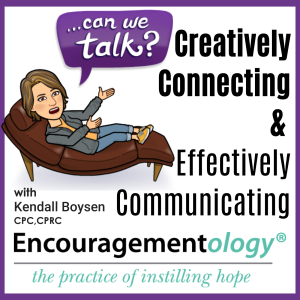
On this show…..we are getting creative with our connections and effective with our communication. We have the unique ability to build rapport, develop meaningful and lasting relationships, share the most important details of our lives, brainstorm, give & receive encouragement, and love - why waste a single ounce of that ability. We may be inclined to say NOW more than ever we need to get creative in the way we connect and communicate but don’t forget, every generation faced their own unique challenges. When something is valued it becomes a priority and priorities get special treatment. All of a sudden time and resources are not an issue when something is that important to you
We start with ranking our connections and the importance they have in our lives to determine what we’re dealing with. You may have a big family full of brothers and sisters, aunts and uncles, with a bahoodle of cousins. Holidays and special occasions might be the perfect chance for you all to get together and catch up while sharing fun stories about times past. Your day-to-day may mirror the same, a big network of friends, a tight group of close friends, and loved valued by your co-workers.
But then again, your situation might look quite different. You are a bit of a loner. Normal-sized family, most of who have moved on and started their own families. You have a few friends with good intentions but you rarely see them unless they or you need something. Funerals and weddings are more like reunions since it’s the only time you actually see everyone. That’s just the way it is - you like your alone time.
Why do I put so much value on connections? I mean really, we’ve had our day in the sun with a wonderful group of close friends. They were there when I needed them and my needs have changed. I’m older now and don’t need them like I used to. I’m really ok alone.
I don’t buy it and neither should you.
We dig into all aspects...Human connection is an energy exchange between people who are paying attention to one another. It has the power to deepen the moment, inspire change, and build trust.
When researchers refer to the concept of “social connection,” they mean the feeling that you belong to a group and generally feel close to other people. Scientific evidence strongly suggests that this is a core psychological need essential to feeling satisfied with your life.
Social Isolation is a state of complete or near-complete lack of contact between an individual and society. It differs from loneliness, which reflects a temporary lack of contact with other humans.
Data indicates that we can increase social connections through practicing compassion for others as well as for ourselves. Another way to build stronger social connections is to ask yourself what would make you happy in contributing to your community. Focusing on “what you can give to others” is a proven way to feel both better about yourself and more connected to others.
Loneliness is a common problem among people of all ages and backgrounds, and yet it’s something that most of us hesitate to admit. But loneliness is nothing to feel ashamed about. Sometimes, it’s a result of external circumstances: you’ve moved to a new area, for example. In such cases, there are lots of steps you can take to meet new people and turn acquaintances into friends.
But what if you’re struggling with shyness, social insecurity, or a long-standing difficulty making friends?
When it comes to shyness and social awkwardness, the things we tell ourselves make a huge difference. Here are some common thinking patterns that can undermine your confidence and fuel social insecurity:
- Believing that you’re boring, unlikeable, or weird.
- Believing that other people are evaluating and judging you in social situations.
- Believing that you’ll be rejected and criticized if you make a social mistake.
- Believing that being rejected or socially embarrassed would be awful and devastating.
- Believing that what others think about you defines who you are.
You don’t have to be perfect to be liked. In fact, our imperfections and quirks can be endearing. Even our weaknesses can bring us closer to others.
It’s okay to make mistakes. Everyone makes mistakes; it’s part of being human. So give yourself a break when you mess up. Your value doesn’t come from being perfect. If you find self-compassion difficult, try to look at your own mistakes as you would those of a friend. What would you tell your friend? Now follow your own advice.
Your negative self-evaluations don’t necessarily reflect reality. In fact, they probably don’t, especially if you:
- Call yourself names, such as “pathetic,” “worthless,” “stupid,” etc.
- Beat yourself up with all the things you “should” or “shouldn’t” have done.
- Make sweeping generalizations based on a specific event. For example, if something didn’t go as planned, you tell yourself that you’ll never get things right, you’re a failure, or you always screw up.
Try not to take things too personally. The other person may be having a bad day, be distracted by other problems, or just not be in a talkative mood. Always remember that rejection has just as much to do with the other person as it does with you.
This is a great time to insert Don Miguel Ruiz’s #2 agreement - Don’t take things personally
Whatever happens around you, don’t take it personally… Nothing other people do is because of you. It is because of themselves. All people live in their own dream, in their own mind; they are in a completely different world from the one we live in. When we take something personally, we make the assumption that they know what is in our world, and we try to impose our world on their world.
Effective communication is about more than just exchanging information. It’s about understanding the emotion and intentions behind the information. As well as being able to clearly convey a message, you need to also listen in a way that gains the full meaning of what’s being said and makes the other person feel heard and understood.
Effective communication skill 1: Become an engaged listener
Skill 2: Pay attention to nonverbal signals
Skill 3: Keep stress in check
Skill 4: Assert yourself
CHALLENGE: Make space and align your priorities in creating and maintaining healthy connections. Giving and receiving encouragement is just one of the many joyful facets of effective communication. With any skill, it takes awareness and practice!
I Know YOU Can Do It!
Tuesday Nov 24, 2020
Tuesday Nov 24, 2020
SHOW NOTES:
On this show...say goodbye to the stale, same ol’-same ol’ self-sabotaging, counterproductive, and unhealthy routines that keep us stuck. We are adopting good ones and breaking bad ones. Yep, it’s that simple. Well, simple to say it but every good plan is just a “good plan” without action. So get ready to take action! Gone are the days of endless excuses and pathetic procrastination. We are about to give ourselves a swift kick in the shoulda, woulda, coulda, and get busy. Tired of wanting to get somewhere but never feeling forward momentum?
Think about your day, week, month, or year. How much of your time is spent on autopilot. You know, just aimlessly going through the motions? Routines can be comforting because of their consistent nature but they can also be habitual rarely challenged. The scientific community suggests that we make about 35,000 decisions each day. Our brain can’t possibly take the time to consider every single thing we do. We probably need to explore this concept from a few angles, Not being present or intentional, living in denial, and resistant to change. I can already gather that there won’t be an easy dissection between them but some combo of all three.
- You dread the day ahead.
- Your daily routine is predictable.
- You do things without thinking.
- You can’t seem to put your phone down.
- You stay deep in thought.
- You have a difficult time remembering.
- You can’t seem to let go.
- You’re not making meaningful progress.
- You say “yes” more than you say “no.”
- You know there’s a better life to be lived.
How much time do you spend visualizing your future? You might think it’s fantasizing and even heard “Get your head out of the clouds” at least at some point in your life. But how are you supposed to get “there” if you don’t see yourself there? Start now - Imagine your life in the next 2 years. Where do you want to be, what are you doing, and what are you NOT doing. Be specific with the details. Just being in a better position, job, money, or family is not a clear enough picture to create motivation.
Now, repeat this exercise for 5 years, 8, and even 10 - journal. about it, create some vision boards like Pinterest to gather visual cues. Whatever helps put you clearly in the scenario.
10 years ago I started working on breaking bad habits. One by one - it was a personal competition between my reason and my desire. I have really strong will-power if I set my mind to something and really really want it. I saw these habits as stumbling blocks in the bigger picture. Until I was free and unencumbered, I couldn’t get to where I wanted to go, and at the pace, I wanted to get there. I had to get real with myself and stop hiding behind excuses and false justifications. I’m good at selling myself on almost anything. Bigger picture - does this help propel me further or keep me where I am. Ok, it has to go.
Once a year there is a big push to let go of the past and move forward, adopting healthier routines. Eating right, exercising, cleaning out & purging clutter are some of the top ones that come to mind. But what about our day-to-day, mindless routines - are they creating more resistance than necessary?
Nick Wignall shares 6 Subtle Habits That Are Sabotaging Your Happiness
- Worrying about the future and other people’s opinions of you
- Isolating yourself when you’re feeling down
- Keeping quiet and “going with the flow”
- Talking trash to yourself in your head
- Trying to manage your stress
- Believing your own thoughts unconditionally
Oh if it were that easy just to let it go!! Like a monkey on our back, we can accept all the reason in the world but when it really comes down to shaking it off, we create yet another justification point that our mind accepts. What happens next, we put off doing anything waiting for a more acceptable time. Hogwash. YOU have the power to STOP doing anything you don’t want to do today or at least to redirect your energy in a positive new direction.
Our routine is aptly shaped by our habits. A perfectly planned day may fail to deliver the end result if procrastination is one of your vices. It takes dedication and patience to overcome those habits and for that Neuroplasticity will come in handy.
So, What is Neuroplasticity?
A term that refers to the ability of the brain to adapt itself or reorganize itself to the new changes in the behavior, environment, or other factors by two-fold action: Synaptic pruning, deleting the neural connections that are no longer necessary or useful, and strengthening the necessary ones that can help adapt to the change.
Consider these healthy routines in the place of bad habits:
- Spend time by yourself exploring your own feelings
- Read - take your mind on a journey of new places, times, and ideas
- Create beauty in your space - make your home a safe and happy place
- Make time for the special people in your life
- Make space for new friends to become better friends
- Challenge old and outdated beliefs in yourself and the world around you
- Find ways to give back in a meaningful way - time, attention, resources
CHALLENGE: Be honest with yourself about mindless routines and bad habits that might be preventing you from reaching your goals. Visualize your life in five years and take action now removing the barriers from hitting that timeline. Replace bad habits with healthy routines that bring out the best in you!
I Know YOU Can Do It!
Tuesday Nov 17, 2020
Tuesday Nov 17, 2020
SHOW NOTES:
On this show…we are cleaning out the junk draw of life and organizing the chaos before it becomes chaotic. What’s that? Too late you say? Never! Don’t throw in the towel and keep piling it up hoarder style take charge and admit to yourself, enough is enough. You deserve peace, joy, and happiness, and wading through emotional and psychological clutter is unnecessary and counterproductive.
As you sit here today, let’s identify where the chaos is coming from. Everyone is different, in different situations, and at different stages of their life. Try to rise above gaining a new perspective of the bigger picture. I love to actually visualize this exercise. Feel yourself floating up over your life and looking down. Everything naturally gets smaller as the angle is wider and more of the pieces and parts come into one view. Nothing is as it has to be.
For many of us, we want our lives to settle down and for things to run smoothly. But week after week, month after month, year after year, while there may be different players and different facts, it’s always the same old story. Our lives are chaotic.
Here are seven reasons we might be creating chaos-filled lives from Boni for livealifeyoulove.com. See if one or more of them rings true for you.
- It’s your story
- It’s your identity
- You (secretly) like it
- You don’t really think you have a choice
- You believe you deserve it
- You have nothing to replace it with
- Success scares the heck out of you
I talk about my experience...For me, chaos can come in the way of spreading myself too thin. I’m not a hoarder but more of a minimalist so I don’t struggle with physical clutter. I don’t obsess over the times I’ve been wronged or feel the same pull I once did to fix others so I don’t struggle with emotional clutter. Where I can overextend myself and create a bit of chaos, is in my commitments.
Let’s face it, life is busy in general so to avoid chaos at certain times is unrealistic. But….maybe finding ways to embrace the chaos and reorganize is a positive coping strategy.
- Accepting the Chaos of Life is Better Than Trying to Fight it
- You Cannot Predict the Future
- You, Will, Feel Better DOING Than NOT DOING
- One Thing Always Leads to Another
- You, Will, Become a Better Person…Faster, Stronger, Leaner and Sharper
- You are Resilient and Know How to Adapt
- You Are Meant for Bigger Things
- Chaos Forces us to Clarify What’s Really Important…and What’s Not
- It Will Make you GRATEFUL
- Chaos Can Be Transformative
- Things Have a Way of Working Out in the End
If you are drowning in chaos feeling overwhelmed and stuck - embracing more and leaning in may not be the right move at this time. For you, giving yourself time to identify and declutter your life might be the only place to start. Spend some time by yourself, unplugged, listening to your heart. So often we are looking for a quick way out so we grab a youtube video on how to organize or read a blog on letting go.
You have a responsibility to yourself to push-back. Just as you feed yourself when you are hungry, bath when you are dirty, and sleep when you are tired, consume info as needed. Want to know what the weather is - look it up. Need to know the weather patterns for the country….not sure you do. Have a lot invested in the market and need to check the pulse - fine, get alerts as things go up and down by the minute - not necessary. These are just two examples. Apply them to what you digest today and what you actually NEED to know. There might be some overconsumption issues.
Every day, as soon as you wake up, ask yourself this question: “What do I need to let go of right now to be calm?” In other words, what thoughts are causing chaos in your mind?
Every thought you have creates a physical response in your nervous system, and an emotional feeling in your body. Yet, you often allow your mind to go wherever it wants to go, without taking control over the direction it goes. Pay attention to the emotional and physical responses in your body when your mind goes to that chaotic, negative place.
Ask yourself who or what are you trying to control that you really don’t have any control over? Focusing on producing specific outcomes in your life makes you fixate on controlling things that you really don’t have any control over.
To create an immediate sense of inner calm and peace, start a daily practice of letting go of past regret and future worry, and consciously direct your mind to right here, right now.
CHALLENGE: Find the root of chaos in your life to treat the symptoms appropriately. Let go, lean in, or reroute to get time and space to include joy and peace. You have choices, choose wisely.
I Know YOU Can Do It!
Tuesday Nov 10, 2020
Tuesday Nov 10, 2020
SHOW NOTES:
On this show…we are taking action, becoming our own superheroes, and saving ourselves. Now you might think, “yeah right, easier said than done!” and you would be right, words are not enough - it’s going to take action. Let’s not forget the famous credo of the infamous Spiderman, "With great power comes great responsibility." Saving the day is no easy task and who wants to do that over and over. After you swoop in and become the hero of your own life it’s time to be strategic. How can we harness this power for the good and make sure we spend our precious time wisely.
Have you ever been asked, “if you could be a superhero what would be your power?” Seeing through metal, leaping tall buildings, breathing underwater?
Of course, it’s fun to fantasize about dressing up as an alter ego and fighting all the demons in our lives but the reality is, you do have power over your life. Even on the days your feel powerless, there is a phone booth just ready for you to change, empower yourself, and fly to your own rescue.
For fun, you can go to https://www.whatsyourpower.com/ and take a short quiz to find out what your superpower might be.
To get here or to be any help at all, I had to start with myself. I had things a little distorted, instead of helping to make the world a better place I wanted to FIX the people in my life to make my world a better place. Helpful? No, unproductive and frustrating. I had to grab my own oxygen mask first before I could assist anyone else.
- We think self-care means being selfish.
- We confuse “rescuing” with caring.
- We are accustomed to relationships based on neediness, not real love.
- We don’t realize we teach people how to treat us.
- We expect others to take care of us.
- We don’t realize our worth.
Finding a positive support system is paramount. Plugging into good people who want the best for you and guide you instead of hold you back is critical. Spending time connecting spiritually and listening, studying, and meditating is soul-nourishing. Saving yourself isn’t one act of bravery, it’s an ongoing meaningful mission.
Just as a superhero has powers and props to help them through any struggle - so do you!
Superheroes don’t wipe their problems away – they confront them. And they do so with very specific strengths of character. The physical powers are secondary, really, to their character traits. Being your own superhero means that you adopt those character traits, even if you don’t have X-ray vision.
Patrick Cole gives us 8-Steps to Personal Strength in an article he wrote for everydaypower.com
- Use Failure and Adversity to Propel You
- Assess Your Mental Strength
- Name Your Powers
- Identify the Detractors/Weaknesses
- Listen to Your Inner Self and Respond
- Embrace the Negativity – Then Knock it Out of the Park
- Gather Your Weapons
- Stay True to Your Principles
For too long I avoided me and my problems as I worked on saving everyone around me. I was convinced it was my purpose otherwise why did it feel like everyone needed me so much. My superhero mask must have been on backward because I was certainly in the dark. I had to take a good hard look at myself, my behavior, and start getting real. I had my own slew of problems that I wasn’t owning up to. Time to grow up and face the music instead of the firing squad.
Marelisa Fabrega gives us some Rules of Adulthood in an article she wrote for daringtolivefully.com
Persecutor: If you’re having a problem, or you’re facing an obstacle to achieving a goal that’s important to you, you’re likely to see that problem or obstacle as if it were a persecutor (the persecutor can be a person, an event, a situation, and so on).
Victim: You act like you’re being victimized by the persecutor, and you feel helpless to do anything to remedy the situation.
Rescuer: Since you feel like you can’t remedy the situation yourself, you wait passively for someone or something to come to your rescue.
A lot of our culture is made up of this drama triangle. For example, you can recognize the drama triangle in stories that involve a damsel in distress, a villain holding her captive, and a hero who sweeps in to rescue her. Of course, this dynamic doesn’t apply just to women; it applies to men as well. A lot of us are harboring rescue fantasies.
Be honest with yourself: is there an area of your life in which you’re passively waiting for a stroke of luck or for someone to come out of the blue and save you? Are you telling yourself, “Someday, when this or that happens, I’m finally going to be able to . . .” Stop waiting for a rescuer or for some chance event to take place, and begin taking steps to rescue yourself.
CHALLENGE: take a look in the mirror, explore your denial and your truth, abandon your belief that your powers are not to be used for your own rescuing, and take action today. Saving your world is a worthy cause.
I Know YOU Can Do It!
Tuesday Nov 03, 2020
Tuesday Nov 03, 2020
SHOW NOTES:
On this show...we are celebrating the victory of life! No one is in the partying mood every day, nor does every day feel like a party. We can see the obstacles ahead of us and feel defeated before we ever get started. We can carry the struggles and failures of our past with us making each step harder than the last. Or we can choose to step out, unencumbered, empowered with positivity, and believe “V” is for VICTORY not, victim. It’s a choice and you have it. Some days you’re naturally pumped because everything is going just as planned, fists in the air, the crowd chanting in your head, and other days, it’s all you can do to show up. What you tell yourself and how you attack your day directly affects your outcome.
Someone one time...ok actually people ask me all the time, “are you always this happy?”. Sometimes they phrase it as a statement; “You can’t NOT be this happy all the time!” And they would be correct but “this happy” is relative. I realize that my mood is my choice and no one can make me feel anything I don’t want to feel.
A follow-up question or statement I usually hear next is, “how do you let things roll off your back so easily?” Well the answer to that is, I don’t always. But again, I have to make a conscious effort to let go and move one. The primary reason I find that so doable is, I don’t like to be in a bad mood. I don’t like the feelings of stress, anxiety, or sadness. I don’t like to be melancholy or irritated. You know what I do like, problem-solving and diverting my attention to things that make me happy, feel creative, or that nourish my soul. It’s a bonus when I can pick up all three feelings in the same activity.
We dig a little deeper into victimization and feeling victimized to understand how to achieve victory.
The victim mentality rests on three key beliefs:
- Bad things happen and will keep happening.
- Other people or circumstances are to blame.
- Any efforts to create change will fail, so there’s no point in trying.
People who feel trapped in a state of victimization often do express a lot of negativity, but it’s important to realize significant pain and distress often fuel this mindset.
- Avoiding responsibility
- Not seeking possible solutions
- A sense of powerlessness
- Negative self-talk and self-sabotage
- Lack of self-confidence
- Frustration, anger, and resentment
Where does it come from?
Very few — if any — people adopt a victim mentality just because they can. It’s often rooted in a few things.
Past trauma
- Betrayal
- Codependency
- Manipulation
We take a sideline because this is right up my alley. I am a codependent and it took me years to come to grips with that term. I didn’t think there was anything wrong with ME - it was everyone else around me! I was doing it all and I felt powerful...at first. Then taken for granted and eventually, powerless. Why couldn’t people just do what I was telling them to do and we would all be happier. Could I even hear myself? How insane is that? They would be happier if they just did as I said.
Detaching from the responsibility for others’ emotional happiness is quite possibly the most impactful lesson I’ve ever learned. I’m still a people pleaser to some degree. This is a deeply rooted compulsive behavior and for me a knee-jerk in every way but I’m aware and with awareness comes change.
Remember, many people living with this mindset have faced difficult or painful life events. This doesn’t mean you have to take responsibility for them or accept accusations and blame. But try to let empathy guide your response.
- Avoid labeling
- Set boundaries
- Offer help with finding solutions
- Offer encouragement and validation
- Consider where they’re coming from
Time to change the self-talk and become your own mentor. Being around positive people who speak life and love into your world is optimal but you can’t always rely on someone else to be there when you need a shoulder to cry or a joyful injection of good news. It may take you clearing out the dark corners of your mind and replacing the negative with positive.
We go through 15 mantras you can use daily...1.) All the strength you need to lead your life in the direction that feels good is within, you don’t need to acquire or learn anything; it is inside of you.
What happens when you’re feeling your zen and then that anxious feeling of dread and despair comes back….what do you do? Pity-parties are not a reason to celebrate so I guess we aren’t there yet. Remember, we are looking for victory, right?
Self-pity reinforces the sense of being a victim bringing with it, hopelessness and inaction.
Self-compassion also acknowledges the difficulty you find yourself in. But it is not about feeling sorry for yourself, blaming others, or dwelling on misery.
We discover some new mantras and powerful exercises to create self-awareness and self-compassion.
This is a moment of suffering.
I am having a really hard time right now.
It’s painful for me to feel what I am feeling.
This is very difficult.
Exercise A:
Put your right hand under your armpit near your heart.
Put your left hand on your right shoulder.
Stay in this posture until you feel a shift.
Choosing to take responsibility for your inner state will help you heal and remember that you can recover, rebuild and thrive even after you have been stopped in your tracks by fate, other people, or even yourself.
CHALLENGE: Don’t accept your circumstances without activating your power to choose, your mood, your resolve, your outcome. Decide your desire for happiness is stronger than your need for control. Let go and move on. Claim victory and celebrate your journey!
I Know YOU Can Do It!
Tuesday Oct 27, 2020
Tuesday Oct 27, 2020
SHOW NOTES:
On this show…we are identifying and plugging into your source. Your source of inspiration, support, motivation, accountability, and love. What makes you tick? It’s important to understand what lifts your up and gives you hope if you want to tap into a steady stream and just as important, what keeps you down if you want to make sure you avoid toxic negativity. So often we just coast through life, consuming and regurgitating, not questioning why, how, or IF - if it’s healthy or harmful. Remember, you have the power to control what you consume and what takes root. Getting too close to the fire, step back or at least put on some protective gear. Don’t just stand there mesmerized by the intoxicating flames.
When you think of JOY, what comes to your mind? Who comes to mind? Joy is defined as a feeling of great pleasure and happiness. If joy could be prescribed I would want a once a daily dose at least!
Donna Rockwell, Psy.D. digs into this question in her article: Desperately Seeking Happiness
Recently, a science of happiness has cropped up in the field of psychology. There are many studies on every aspect of happiness, the most acclaimed of all human pursuits. After much scientific discussion and review, researchers have come to define happiness as the ability to sustain an overall sense of well being over time. However, the capacity to generate and maintain well being while coping with daily challenges requires a certain amount of emotional flexibility.
Authentic happiness is never lost. Because it is burned into the very essence of our being, it remains a touchstone within us that can be accessed at any time, no matter what is going on around us. We need only conjure up images of happiness or remember an event or moment, and we are there, alive in the energy of our own awareness.
Think about your day today….when did you smile? When did you laugh? What happened and what didn’t? Fill in the blanks with a recreation of your favorite day and notice the small things that would bring you joy.
I love to sleep in - at least I think I do so to me, that brings me excitement. I rarely, in fact, sleep late but knowing I have a free Saturday morning that could lend itself to some extra Z’s is happiness. I love hot coffee that stays hot to the last drop - delightful. I love to laugh so whether it’s a silly joke or a well-thought-out comedy, I’m there. I’m a sucker for warm dessert - doesn’t matter what it is but if it’s bubbling with a little cold ice cream - whoa! I love to hear "Mmmmm that’s good" after I’ve slaved over a hot stove. Nothing makes me smile more than a compliment for a job well done. I find joy in being there for someone who needs a little extra encouragement - that feeling makes my heart sing.
What about motivation? What do you plug into to inspire you to want to do better, go farther, and try harder? You might be motivated by fear, guilt, peer pressure, or more of an internal clock pushing you to push yourself.
Brianna Steinhilber wrote about 3 times of motivation in her article for Better by Today.
- Extrinsic
Doing an activity to attain or avoid a separate outcome - Intrinsic
An internal drive for success or sense of purpose - Family
Motivated by the desire to provide for your loved ones
What about fear as a motivator? So how can you let go of fear, unplug, and re-route your lines to joy?
As humans, we are hardwired to seek pleasure and to avoid pain. According to Freud, as children, this desire is the driving principle behind all choices and is about immediate gratification.
But as we enter adulthood, we learn to delay gratification, which is known as the reality principle. As part of this, one is able to rationalize the desire for long term pleasure and so in the short term is able to endure the pain of one type or another.
The problem with fear as a motivator is, it is limited in its ability to create motivation over the long term. It can be a helpful spark for some people, but if this is all they’ve got, it’s highly likely to lead to failure.
Does it all come back around to perception? So much of life does. How you see things directly affects how you react. What you hear and believe dictates how you respond. We should be held accountable but responsible for us and everyone around us? I don't think so!
For me, I had to start listening to myself. For too long I had modeled and shaped my life based on the thoughts and opinions of others. What to say, what to do, who to be, and how to feel. I couldn’t even hear myself if I was even trying to assert my own ideas at all. I had to take a step back and sit with my own thoughts and feelings to be able to recognize them as my own. Once I was able to tap in and listen to myself I started gaining confidence and trusting what I heard. I’m looking out for me now and that’s ok, it’s not selfish or self-centered it’s responsible.
Once I was attuned to myself, I started looking for sources of inspiration that were truly inspiring - out for my greater good and brought joy into my life. When I let go of fear, my obsession to be responsible for everyone around me, and my need to please - I found so much extra time and energy that I could channel into whatever source served me.
- I need time by myself, time with God, and time with positive people who want also want to plug into the positive - so I plug into my connections
- I need to encourage and serve in a healthy and constructive way. - so I plug into volunteering
- I need to create, design, and impact my surroundings with my art - so I plug into creativity
- I need to explore and grow - books, languages, new ideas, hobbies - so I plug into education
Inspiredgoodvibes.com helps us with 10 ways to stay connected to good energy every day.
- HAVE A SPIRITUAL PRACTICE
- CONNECT TO YOUR BODY
- MONITOR YOUR THOUGHTS
- TRUST
- Be PRESENT
- LIVE IN LOVE (not fear, doubt, and worry.)
- ALLOW - FOLLOW THE ENERGY
- HONOR YOURSELF AND YOUR CHOICES
- BE GRATEFUL
- GIVE
CHALLENGE: evaluate your current source of energy and unplug when you feel depleted. You have the power to choose a more positive source of inspiration - plugin and share your joyful current with others.
I Know YOU Can Do It!
Tuesday Oct 20, 2020
Tuesday Oct 20, 2020
SHOW NOTES:
On this show...we will be finding our voices and speaking up! Gone are the days of passively watching life unfold before your eyes. A silent bystander in your own story. It’s time to communicate in a kind but direct way, what you want, need, and desire. Whether you’re afraid to rock the boat or worried that you won’t be able to control the volume once you get started, there is a positive and healthy alternative for you. If Encouragementology has opened your eyes to anything it’s that you have the power to change what isn’t working. First, you have to understand it isn’t working, then you need to be willing to change your perspective and take action.
We’ve all heard things like “use your inside voice”, “speak up I can’t hear you” (well maybe not me lol) “do you know how to whisper”, “be direct”, “say what you mean” - There seem to be numerous ways and lots of rules when it comes to using your voice. You’re never going to get it 100% right and really? Who wrote the rules.
What happens if you don’t communicate your wants, needs, and desires to those you love? You don’t get them. No one is a mind reader and some of it SHOULD be common sense but you can’t rely on everyone’s ability to do the kindest and most responsible thing. Sometimes it takes you leading the way.
What about communicating fears, challenges, and boundaries? The same thing goes. It takes you, finding your voice, speaking up, and realizing people will treat you the way they want unless you show them how you want to be treated.
Kit Stone wrote an article for Rewire called Communicating Your Needs Isn't Selfish, It's Selfless
Some people have more experience communicating their needs than others. To get into this type of conversation, Rose suggests a four-step process of “naming what you need and asking for how to remedy your emotions” that doesn’t attack or place blame and allows you room to speak from your heart.
- Describe your observations
- Name how the situation makes you feel
- State what you need
- Make a specific request
We explore boundaries as a way to feel free to speak your mind...Creating healthy boundaries can be hard enough. Knowing you need to make a change in your life and then being willing to let go, move on, distance, or eliminate can be life-changing. But when you don’t clearly communicate your wishes, it can be futile
I found a good evaluation in Boundary Setting and Healthy Communication from the Georgia Way
Here are some examples of Healthy Boundaries
- Appropriate trust. Moving step by step into intimacy – emotionally and physically.
- Staying focused on your own growth.
- Maintaining personal values despite what others want.
- Noticing and speaking up when someone invades your boundaries.
- Trusting your own decisions.
- Knowing who you are and what you want.
- Self-respect – not putting too much hope in someone else.
- Recognizing that friends and family are not mindreaders.
- Not allowing someone to take advantage of you and your generosity.
- Saying “No” to food, gifts, touch, and sex that you do not want.
And here are some examples of Unhealthy boundaries
- Trusting no one or trusting everyone.
- Letting others define you, direct you, and/or describe your reality.
- Going against personal values or rights to please another person.
- Allowing someone to take as much as they want from you.
- Falling in love with someone who reaches out, or with a new acquaintance.
- Telling all and talking at an intimate level at the first meeting.
- Expecting others to fulfill your needs.
- Believing others can anticipate your needs.
- Being sexual for your partner, not yourself.
- Sexual and physical abuse.
We talk about the interruption technology is having on meaningful communication...We have multiple communication devices at our fingertips for the better part of a day but can’t seem to get our point across or our true feelings understood. We make quick judgments and move on to the next person. We shorten our response to just logistical responses and never get past a shallow intent.
What is happening to us as a society from not being able to adequately communicate our feelings? It’s as if we’ve been given a global coloring book and asked to stay between the lines. There is article after article strongly communicating opinions and asking you to join their march or is a hunt. Social media has given a soapbox to anyone who can type a post and texting has replaced the need to look someone in the eye to get your point across.
Melissa Nilles wrote and an article entitled: Technology is Destroying the Quality of Human Interaction What I find interesting and a little sad is that this article was written in 2012 - here we are 8 years later and instead of moving in the right direction, we’ve created even more and faster avenues for the same behaviors.
Finding your voice can look different for different people. Not everyone struggles with asserting themselves and communicating their ideas. Not everyone is in need of healthier boundaries, not everyone struggles with self-confidence, not everyone relies on social media or technology to keep them connected.
But everyone can identify with a need to communicate your wants, needs, desires, challenges, and fears in a healthy and nurturing way. You can go with the flow not making waves or you can flap your arms and swim. It’s your choice.
Kathy Caprino gives us 5 Steps To Speaking Up Powerfully When You Feel You Can't
#1: Examine what you learned in childhood.
#2: Get very clear about what you need to say, and have that conversation.
#3: Be the highest version of yourself when you communicate.
#4: Understand the ecosystem and the individual you’re dealing with.
#5: Prepare for the consequences
Many people resist speaking up for themselves because they dislike angering others. If you're striving every minute to make everyone happy, then you're not making yourself happy, and you’re not saying and doing what needs to be done to live a successful, fulfilling life.
CHALLENGE: Find the courage to speak up so you can honor your own boundaries, clarify what is not acceptable to you, and start living a happier, healthier, more empowered life.
I Know YOU Can Do It!
Tuesday Oct 13, 2020
Tuesday Oct 13, 2020
SHOW NOTES:
On this show…...we are talking about patience & resilience, the concept of Bloom Where You’re Planted. Are you ever exactly where you want to be in your life? It’s ok to be pointed toward the horizon but keeping your focus, hopes, and dreams there means you can’t prosper where you are. Today we are here. Why wait another moment to bloom. It may not be a perfect time but today has been given to you and each one should be preciously handled. There is opportunity all around you, here, and there.
Sometimes it takes hearing something over and over and over before it takes root and other times it’s a revelation. I just heard “Bloom Where You’re Planted” last week. BOOM it hit me!
Hearing it out of context, you could think it means just be happy with who you are and where you are and don’t strive for better. However, that isn’t where my mind went. I would have pruned those roots right out because I’m all about goal setting, action planning, and personal growth. What I heard is you have an opportunity today and every day. If you put off personal development until you reach your destination then you’ve missed some of the ripest opportunities for growth.
Today, you might not be able to change your logistical circumstance but you can change your mindset and find a new way to grow in ways you hadn’t thought of. When things are going perfectly you don’t have to be as creative, patient, or resilient. It’s when you hit a challenging time that it forces you to modify your approach and look for positive alternatives.
We can’t avoid disappointment so we have to find ways to walk through it, understand it, and learn. I’ve heard it before - “I don’t have any expectations”. Which sounds good and super healthy but doesn’t it sound realistic? What happens when your expectations are for other people? Talk about disappointing. That was one of those ideas that didn’t immediately take root for me. “You can’t change other people.” I guess when I first heard it being a headstrong teenager, I took it as a challenge. A heart-breaking, overwhelmingly frustrating challenge.
I found this article that breaks it down a bit: Expectations are premeditated disappointments: Five ways to maintain a flexible mindset in an uncertain world
- Put your thoughts and feelings somewhere you can look at them.
- Notice your time-traveling mind. Your mind’s ability to travel in time is amazing.
- Intentionally take varied perspectives.
- Establish a “present-moment anchor”.
- Label expectations as to what they are: hopes and worries.
See you’ve always had the power, even when you’ve felt completely helpless. I love a change in perception, it opens up a whole new world of possibilities. So just like my revelation of “Bloom Were You’re Planted”, I find new ways of seeing the same thing when I listen to others.
Mallory Joy gives us 5 Ways to Bloom Where We're Planted in her article for Medium
- Embrace the challenge.
- Stop complaining.
- Focus on others.
- Celebrate the small things.
- Visualize the future.
Embrace the difficulty, knowing that these experiences make you who you are. There will be beauty from ashes, but it’s just the challenge at the moment to keep that end goal in mind.
CHALLENGE: take a moment and notice where you are. Be thankful for the gift of awareness and the power to make the most of every moment. Have patience as you dig in and bloom where you’re planted. Seize the day and shine!
I Know YOU Can Do It!
Tuesday Oct 06, 2020
Tuesday Oct 06, 2020
SHOW NOTES:
On this show….we will be releasing guilt. Are you tired of feeling guilty for feeling guilty? You aren’t alone. We’ve all done something we aren’t very proud of, disappointed someone, and let ourselves down. Carrying shame and guilt can be a full-time job that prevents you from realizing your true potential. I wish we could just let go of what doesn’t serve us in a positive way but let’s be honest, it is not that easy. The first step is awareness, then understanding, and then if you are good and ready...the releasing.
When do you feel those guilty feelings creeping in? Sometimes they can grab you in the pit of your stomach and say “hey...are you forgetting something?” and you are back to square one. Reminded of everything you’ve done wrong instead of what you’re doing right. Catching yourself before you start to spiral means you can change direction. “Nooooo...I haven’t forgotten anything BUT I did forgive myself and today I’m working on myself and staying stuck in the past, where I don’t have the control to change anything, it’s helpful! So back off!”
Fatin Khan, gives some ways to work on self-awareness:
If we are concocting the right recipe for a change in behavior then we have to add a dash of willingness. No one can want the change more than you. Sure, your family can plead with you concerned about your well being. Your partner can beg you to let go and move one. But all the self-help books, motivational blogs, and inspirational quotes won’t be enough to make it happen. You have to be open and willing and wanting something more.
I found The Definitive Guide to Guile from Dr. Susan Krauss Whitbourne :
Guilt Cause #1: Guilt for something you did.
Guilt Cause #2: Guilt for something you didn’t do, but want to.
Guilt Cause #3: Guilt for something you think you did.
Guilt Cause #4: Guilt that you didn’t do enough to help someone.
Guilt Cause #5: Guilt that you’re doing better than someone else.
Our feelings are important and what directly impacts the quality of our lives. For too many of us, feelings have been cast off and or shoved done so we can maintain a normal appearance to everyone around us. But unlike Scarlett O’hara, not everyone can afford to push these feelings off for another day. It’s important to deal with your emotions today and understand where your power to change comes from.
So is shame the cherry on top? As if guilty feelings weren’t enough, we have to add shame to the mix to tighten the chains and keep a positive future a little further from our reach.
Dr. Neel Burton sheds some light on Shame and Guilt in an article he wrote for Psychology Today.
...Shame and guilt often go hand in hand, which is why they are so often confused. For instance, when we injure someone, we often feel bad about having done so (guilt), and, at the same time, feel bad about ourselves (shame).
So let’s add a little control or lack of to the pot. What can I do NOW to control the situation? Since we’ve established the obvious, I have no control over the past then the only place I do have control is in the present which will predict the future.
Better butter up the forgiveness because that’s the only thing standing between me and the completion of this dish. I have to forgive to move forward.
I love the perspective of Darlene Lancer in her article 18 Tips to Overcome Guilt and Forgive Yourself.
Here are just a few of her suggested tips:
- If you’ve been rationalizing your actions, take responsibility. “Okay, I did (or said) it.”
- Write a story about what happened, including how you felt about yourself and others involved before, during, and after.
- Analyze what were your needs at that time, and were they being met. If not, why not?
Forgiving yourself is not forgetting. There is learning and growth in forgiveness. You have more chapters to explore and being encumbered with the past will just derail your journey.
CHALLENGE: Don’t dismiss your emotions or allow negative feelings to rewrite your destiny. You have the power to walk through guilt and shame, understand your role and responsibility, evaluate your control, and let go so that you can move forward with the freedom to realize your true potential.
I Know YOU Can Do It!